


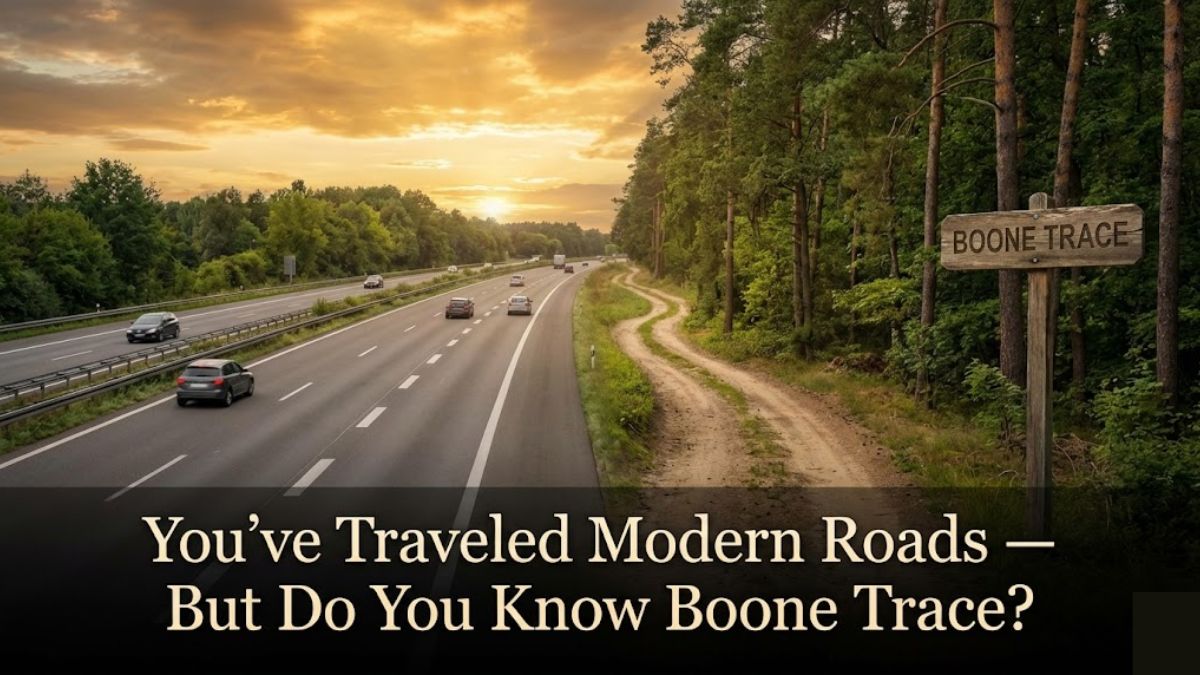
Most Americans are familiar with highways, interstates, and paved roads that connect cities and states. We travel these routes every day without much thought. But long before modern roads existed, early Americans depended on narrow wilderness paths to move west. One of the most important of these forgotten routes was Boone Trace.
You may have traveled modern roads across Kentucky and Virginia, but few people realize that many of these routes follow paths first carved out over 200 years ago. Boone Trace helped shape American travel, settlement, and history. Understanding this trail gives new meaning to the roads we use today.
What Was Boone Trace?


Boone Trace was a frontier trail expanded by Daniel Boone in the late 1700s. It stretched from Virginia through the Cumberland Gap into Kentucky. At the time, this region was dense wilderness, filled with forests, mountains, and rivers.
The trail followed ancient Native American paths that had been used for centuries. Boone and other frontiersmen widened and marked these routes, making them passable for settlers traveling on foot or horseback. Though rough and narrow, Boone Trace became one of the main gateways into the western frontier.
Life Before Modern Roads
Before highways and railways, travel was dangerous and slow. There were no maps, road signs, or bridges. Travelers faced wild animals, harsh weather, and difficult terrain. Moving west required courage and endurance.

Boone Trace provided a known route through the Appalachian Mountains. Even though it was far from easy, it gave settlers a safer way to cross one of the most challenging natural barriers in North America. Without Boone Trace, early westward travel would have been far more limited.
How Boone Trace Changed American Travel
Boone Trace changed how people moved across the land. Instead of traveling randomly through the wilderness, settlers could follow a shared path. This created a flow of movement that reshaped the region.
As more people used the trail, it became a foundation for future roads. Many modern highways in Kentucky and surrounding states follow similar paths because the original trail chose the most practical routes through mountains and valleys. In this way, Boone Trace influenced the layout of modern transportation.
A Gateway to Settlement and Growth
Boone Trace was not just a travel route—it was a gateway to opportunity. Thousands of families used it to reach Kentucky in search of farmland and a better life. Along the trail, settlements began to form.
Forts, farms, and towns grew where travelers stopped to rest or resupply. Over time, these small settlements developed into permanent communities. Boone Trace helped turn Kentucky from a frontier wilderness into a settled region and eventually a state.
The Overlooked Native American History
Long before settlers arrived, Native American tribes used these paths for hunting, trade, and migration. Boone Trace followed routes that held cultural and spiritual importance for Indigenous people.
As settlers moved west along the trail, Native American communities were displaced from their lands. This led to conflict, loss, and forced relocation. Understanding Boone Trace means acknowledging this difficult history as well. The trail tells a complex story of expansion, struggle, and change.
Why Boone Trace Faded from Memory
As America modernized, Boone Trace slowly disappeared from public awareness. New roads replaced old trails, and cities expanded across the landscape. Unlike famous landmarks, Boone Trace was never fully protected or preserved.
Many sections were lost to development, while others became hidden in forests or private land. Without clear markers or education, the trail faded from memory, even as people continued traveling over routes inspired by it.
Why Boone Trace Still Matters Today
Boone Trace matters because it helps us understand how America was built. It reminds us that modern roads did not appear overnight. They evolved from simple paths carved through wilderness by determined individuals.
Preserving the story of Boone Trace helps future generations appreciate the challenges faced by early settlers and Native Americans alike. It also encourages respect for historical landscapes that still exist beneath modern development.
Efforts to Remember and Preserve the Trail
Historians and local organizations are working to document and mark remaining sections of Boone Trace. Educational programs, historical markers, and preservation efforts aim to keep the trail’s story alive.
However, these efforts need public support. Without awareness, remaining pieces of Boone Trace risk being lost forever. Learning about the trail is the first step toward protecting its legacy.
Conclusion
You may have traveled modern roads countless times, but beneath many of them lies a much older story. Boone Trace was one of the paths that shaped American travel, settlement, and history. It opened the frontier and influenced the routes we still use today.
By learning about Boone Trace, we gain a deeper understanding of how the nation grew and the sacrifices made along the way. Remembering this historic trail ensures that its story does not vanish, even as we continue to move forward on the roads it helped inspire.