


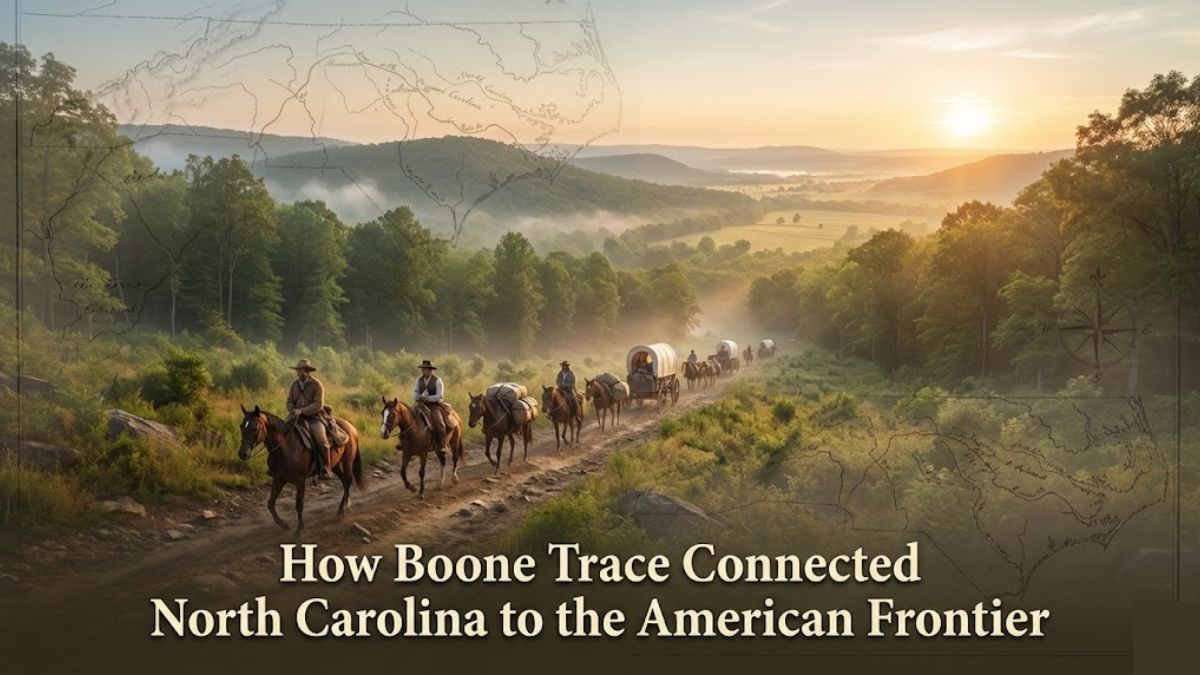
Long before interstates and railroads shaped American travel, narrow dirt paths guided people into unknown lands. One of the most important of these routes was Boone Trace, a frontier trail that helped open the western territories. While Boone Trace is often linked with Virginia and Kentucky, its connection to North Carolina played a critical role in shaping the American frontier.
For many settlers from North Carolina, Boone Trace was the path that led them west. It connected established colonial communities to new opportunities beyond the Appalachian Mountains. Understanding this connection reveals how North Carolina helped fuel westward expansion and early American growth.
North Carolina in the Colonial Era


In the 1700s, North Carolina was home to growing farming communities. Many families owned small plots of land, but population growth made farmland harder to find. As families grew, younger generations looked west for new opportunities.
The Appalachian Mountains stood as a natural barrier. Crossing them was dangerous, slow, and uncertain. Settlers needed reliable routes to reach fertile lands beyond the mountains. Boone Trace offered that connection.
The Origins of Boone Trace
Boone Trace was expanded by Daniel Boone in the late 18th century. It followed ancient Native American trails that crossed through the Cumberland Gap, a natural mountain pass. Boone and other frontiersmen widened and marked the path to make it passable for settlers traveling on foot or horseback.

Although Boone Trace officially ran through Virginia into Kentucky, it connected indirectly to North Carolina through existing colonial roads and trails. Settlers from North Carolina traveled northward into Virginia before joining Boone Trace and heading west.
Why North Carolinians Used Boone Trace
Many settlers who traveled Boone Trace came from North Carolina. These families were often farmers seeking fertile land and economic independence. Kentucky’s rich soil and open land made it an attractive destination.
Boone Trace provided a known and trusted route. Word spread quickly through North Carolina communities about this path to opportunity. Families traveled in groups for safety, carrying supplies, tools, and livestock along the rugged trail.
A Pathway to Kentucky Settlement

Boone Trace became a gateway for North Carolina settlers entering Kentucky. Once they arrived, many claimed land, built farms, and started communities. Towns and forts grew along the trail to support the steady flow of travelers.
These settlements helped transform Kentucky from a wilderness frontier into a populated region. North Carolinians played a major role in this transformation. Their migration shaped the culture, economy, and political future of the region.
Economic Impact of the Trail
Boone Trace did more than move people—it moved goods and ideas. Settlers brought tools, seeds, and knowledge from North Carolina into the frontier. In return, they sent crops, animal pelts, and resources back east.
This exchange supported trade between frontier settlements and eastern markets. Boone Trace helped connect North Carolina’s economy to the growing western territories. Over time, this trade network strengthened early American commerce.
Native American Routes and Displacement
Long before European settlers arrived, Native American tribes used these routes for hunting and trade. Boone Trace followed paths that held deep cultural significance. As settlers moved west, Indigenous communities were pushed off their lands.
This led to conflict, loss of territory, and forced migration. Understanding Boone Trace’s role requires acknowledging this painful history. The trail represents both opportunity for settlers and displacement for Native Americans.
Influence on Modern Transportation
Many modern roads in the southeastern United States follow routes similar to Boone Trace. The trail chose practical paths through mountains and valleys, making it a foundation for future travel routes.
Highways and state roads in North Carolina, Virginia, and Kentucky were often built along or near these early paths. Boone Trace helped shape the transportation network still used today.
Why Boone Trace Faded from Memory
As roads improved and transportation technology advanced, Boone Trace lost its importance. New routes replaced the old trail, and its history faded from public awareness.
Unlike famous historic landmarks, Boone Trace was never fully protected. Many sections were lost to development or became hidden within forests and private lands. Today, only fragments of the trail remain visible.
Why Boone Trace Still Matters
Boone Trace matters because it tells the story of connection—between North Carolina and the American frontier. It shows how early settlers overcame natural barriers and shaped the nation’s growth.
Preserving the story of Boone Trace helps future generations understand the roots of modern America. It reminds us that today’s highways began as narrow wilderness paths walked by determined families.
Conclusion
Boone Trace played a vital role in connecting North Carolina to the American frontier. It provided settlers with a path west, helped establish new communities, and supported early trade and growth.
Though largely forgotten, the trail’s impact remains woven into American history. By remembering Boone Trace, we honor the journeys of those who traveled it and gain a deeper appreciation for the paths that built the nation.