


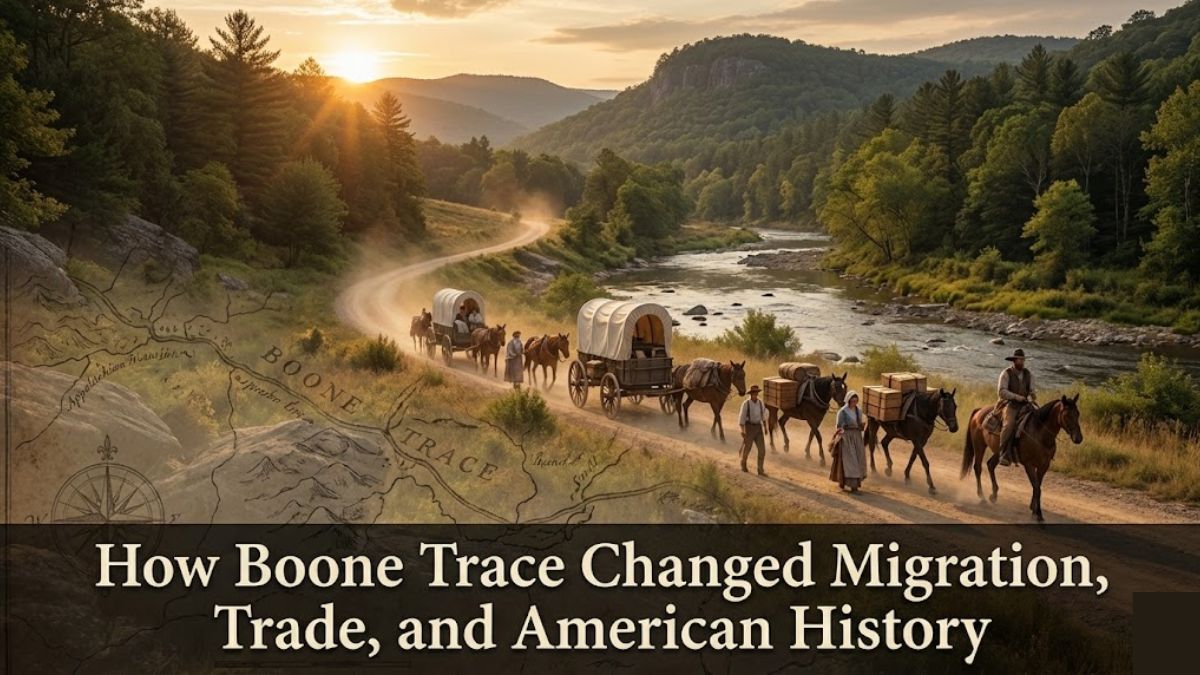
Before highways and railroads connected America, narrow wilderness trails shaped the nation’s future. One of the most important of these paths was Boone Trace. Though little known today, Boone Trace played a major role in early American migration and trade. It helped open the western frontier and influenced how the United States grew. Understanding how Boone Trace changed migration, trade, and American history reveals why this forgotten trail still matters today.
What Was Boone Trace?
Boone Trace was a rough frontier trail expanded by Daniel Boone in the late 1700s. It ran from Virginia through the Cumberland Gap into Kentucky. At the time, this land was largely unexplored by European settlers and was considered dangerous wilderness.


The trail followed older Native American routes that had been used for generations. Boone and other frontiersmen widened and marked these paths, making them passable for settlers traveling on foot or horseback. Though narrow and difficult, Boone Trace became one of the main routes into the American frontier.
Changing Migration Patterns
Before Boone Trace, moving west was extremely risky and slow. Dense forests, steep mountains, and unknown dangers stopped many families from attempting the journey. Boone Trace changed this by offering a known route through the Appalachian Mountains.
Thousands of settlers used the trail during the late 18th century. Families traveled west in search of farmland and opportunity. Kentucky quickly shifted from a remote frontier to a growing settlement area. Boone Trace made large-scale migration possible and helped push America’s population westward.

This movement changed the nation’s population map and laid the foundation for new states.
Opening the Door to Settlement
Migration along Boone Trace led directly to permanent settlement. Farms, forts, and towns began appearing along the trail’s path. Settlers cleared land, planted crops, and built communities.
As more people arrived, Kentucky became an important agricultural region. The trail allowed settlers to transport basic tools and supplies into the frontier. Without Boone Trace, settling this region would have taken much longer and required far greater effort.
The trail acted as a bridge between the eastern colonies and the western lands.
Boone Trace and the Growth of Trade
Boone Trace did more than move people—it helped move goods. Early trade followed the same paths as migration. Farmers and hunters used the trail to transport crops, animal pelts, and other resources back east.
This exchange supported local economies and encouraged further settlement. Trade routes formed along the trail, linking frontier communities to larger markets. Over time, Boone Trace influenced the development of roads and transportation networks that followed similar paths.
By connecting isolated settlements to trade systems, the trail strengthened early American commerce.
Impact on Native American Communities
The growth of migration and trade along Boone Trace came at a cost. Native American tribes had long lived and traveled along these routes. As settlers moved west, Indigenous communities were pushed off their lands.
Conflicts increased as settlers claimed territory and resources. Many Native Americans were forced to relocate, losing their homes and cultural connections. This difficult part of Boone Trace’s history is essential to understanding its full impact.
Recognizing this story helps create a more honest view of American expansion.
Shaping American Expansion
Boone Trace became a symbol of westward expansion. It showed that the Appalachian Mountains could be crossed and that new lands were accessible. This idea encouraged further exploration and trail building across the continent.
The success of Boone Trace influenced later routes, including roads, canals, and railways. It helped create a national mindset focused on growth and movement. America’s identity as a nation of expansion was shaped in part by this trail.
Why Boone Trace Faded from Memory
As technology improved, Boone Trace slowly lost importance. New roads replaced the old path, and modern transportation made the trail unnecessary. Many sections were built over or forgotten.
Because Boone Trace was never fully protected, its history faded from public awareness. Unlike famous routes, it lacked national recognition. Today, only small segments remain visible, hidden within forests or under private land.
Why Boone Trace Still Matters Today
Boone Trace matters because it represents a turning point in American history. It shows how migration, trade, and expansion shaped the nation. Preserving its story helps people understand how the United States developed.
The trail also offers lessons about progress, conflict, and cultural change. Remembering Boone Trace honors both the settlers who traveled it and the Native Americans affected by its use.
Conclusion
Boone Trace played a powerful role in shaping migration, trade, and American history. It opened the frontier, supported early economies, and changed the direction of national growth. Though largely forgotten, its influence remains woven into the country’s past.
Protecting and remembering Boone Trace ensures that future generations understand how a simple wilderness trail helped shape a nation. History does not live only in books—it lives in the paths people once walked. Boone Trace is one of those paths, and its story deserves to be remembered.