


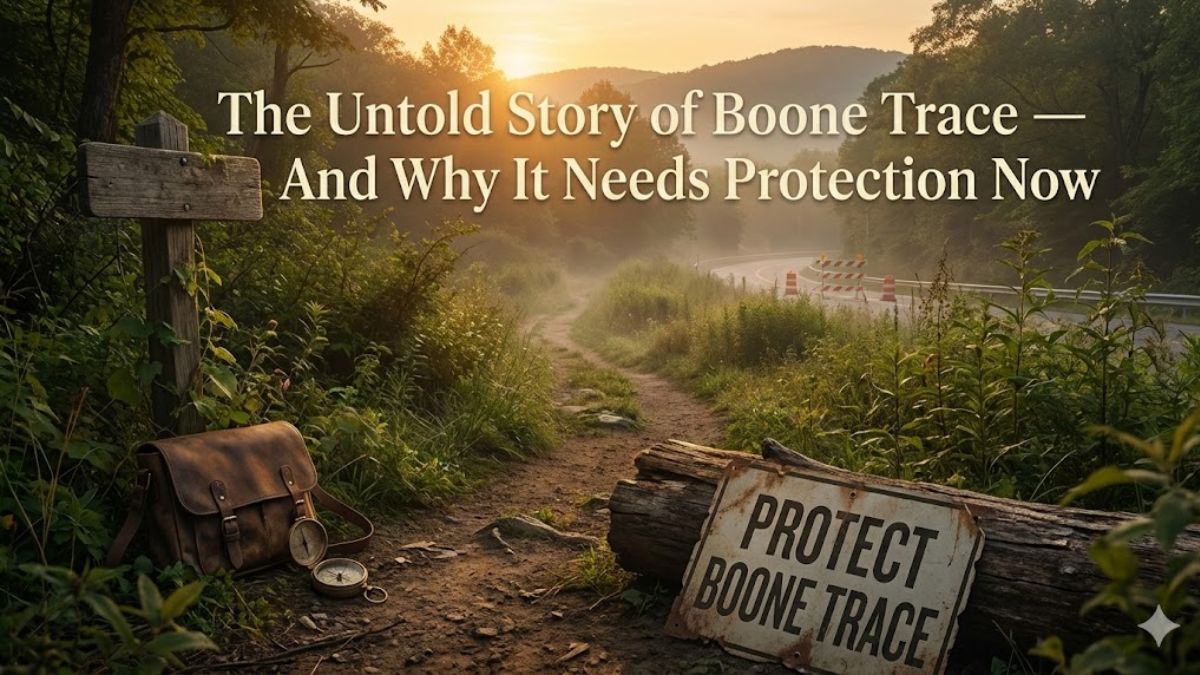
Long before highways, railroads, and cities spread across America, narrow dirt paths guided people into unknown lands. One of the most important of these paths was Boone Trace. Carved through dense forests and rugged terrain in the late 1700s, Boone Trace played a major role in America’s westward expansion. Yet today, many people have never heard of it. Large parts of Boone Trace have been erased by development, neglect, and time. This is the untold story of Boone Trace—and why it urgently needs protection now.
What Was Boone Trace?
Boone Trace was a wilderness trail created and expanded by Daniel Boone and other frontiersmen in the late 18th century. It stretched from Virginia through the Cumberland Gap into what is now Kentucky. At the time, this region was considered dangerous and unexplored by European settlers.


The trail followed Native American paths that had existed for centuries. Boone Trace was not a road but a narrow, rough passage through forests, rivers, and mountains. Despite its difficulty, it became one of the main routes for settlers moving west in search of land and opportunity.
A Gateway to the American Frontier
Boone Trace was more than a trail—it was a gateway. Thousands of settlers used it to reach Kentucky between the 1770s and early 1800s. Entire families traveled on foot or horseback, carrying everything they owned.
This trail helped transform Kentucky from a wild frontier into a settled state. Towns, farms, and trade routes grew along its path. Without Boone Trace, westward expansion would have been slower and far more difficult. It quietly shaped the future of the United States.
The Hidden Role of Native Americans

One often overlooked part of Boone Trace’s story is its Native American history. Long before Daniel Boone arrived, Indigenous tribes used these routes for hunting, trade, and travel. The land held deep cultural and spiritual meaning.
As settlers moved west, Native American communities were displaced, and their connection to the land was broken. Today, protecting Boone Trace also means recognizing and honoring the Indigenous history tied to it. Ignoring this past risks losing a fuller understanding of America’s story.
How Boone Trace Began to Disappear
As America modernized, Boone Trace slowly faded from memory. Roads, railways, and cities replaced many original sections. Farms and private land development covered large portions of the trail.
Unlike famous landmarks, Boone Trace never received strong federal protection. Many segments were never clearly marked or preserved. Over time, the trail became fragmented, with only small pieces remaining visible today.
Without awareness, history quietly disappeared beneath pavement and property lines.
Why Boone Trace Matters Today
Boone Trace is important because it tells a deeper story about America’s beginnings. It represents courage, hardship, and the movement of people into unknown lands. It also reflects conflict, loss, and change.
Preserving Boone Trace gives future generations a chance to physically connect with history. Walking the same ground as early settlers and Native Americans creates a powerful learning experience. History feels real when it can be seen and touched.
The Threats Facing Boone Trace Now
Today, Boone Trace faces serious threats. Urban expansion, highway projects, and commercial development continue to erase what remains. Many landowners are unaware that a historic trail crosses their property.
Climate change also plays a role. Erosion, flooding, and extreme weather damage fragile trail remnants. Without action, the last visible pieces of Boone Trace could disappear within decades.
Once lost, this history cannot be rebuilt.
Efforts to Preserve the Trail
Some historians, local groups, and conservation organizations are working to protect Boone Trace. They document remaining sections, install markers, and educate the public.
However, these efforts often lack funding and national attention. Compared to larger historic trails, Boone Trace remains underprotected. Stronger legal recognition and public support are needed to preserve what is left.
Education is one of the most powerful tools. When people understand the trail’s importance, they are more likely to support preservation.
Why Protection Is Urgent
Boone Trace stands at a critical moment. Each year of delay means more land is lost to development. Protecting the trail now ensures that history is not erased for convenience.
Preservation does not mean stopping progress. It means balancing growth with respect for the past. Simple steps like historical markers, protected corridors, and land agreements can save Boone Trace for future generations.
Conclusion
The story of Boone Trace is one of quiet importance. It opened the door to westward expansion and shaped the nation’s future. Yet today, it survives mostly in fragments and fading memories.
Protecting Boone Trace is about more than saving a trail—it is about preserving identity, history, and lessons from the past. If action is taken now, this historic path can continue to tell its story. If ignored, Boone Trace may vanish forever, taking a vital piece of America’s heritage with it.