


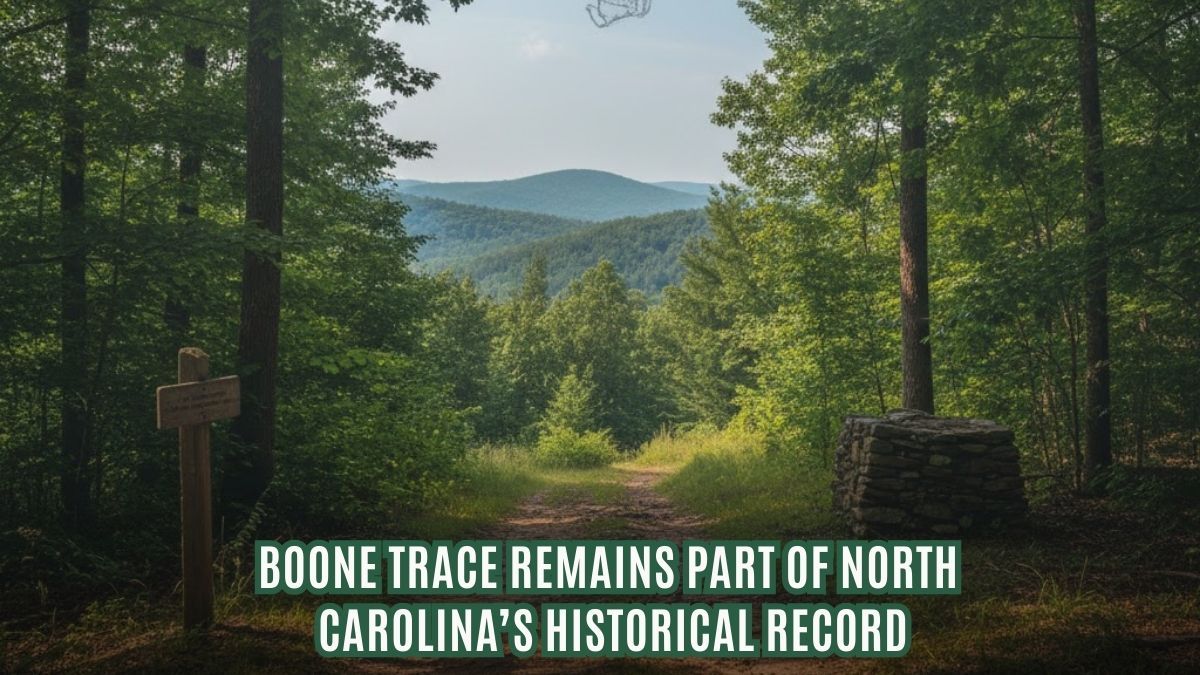
North Carolina’s history is deeply connected to the frontier trails that guided early settlers into the western territories. Among these, Boone Trace holds a special place. Though often overshadowed by modern highways and more famous historic routes, Boone Trace remains an important part of the state’s historical record.
The trail tells the story of migration, trade, and community-building in the Appalachian region. While much of the original trail has faded into forests and private lands, its legacy continues to shape North Carolina’s understanding of its early history.
The Origins of Boone Trace


Boone Trace was developed in the late 18th century, largely under the guidance of Daniel Boone, one of the most famous frontiersmen in American history. The trail followed ancient Native American paths, chosen for their natural ease of passage through mountains, valleys, and river crossings.
Though the main route ran from Virginia to Kentucky, North Carolina settlers were among its primary users. Families from western North Carolina traveled north and west along connecting paths to reach Boone Trace, linking their communities to the growing frontier.
Boone Trace and Appalachian Communities
For settlers in the Appalachian Mountains, Boone Trace was more than a route—it was a lifeline. The rugged terrain often isolated communities, making trade, communication, and travel challenging.

Boone Trace connected isolated mountain settlements, allowing families to visit neighbors, attend church services, and participate in regional markets. This connection strengthened social ties and helped establish a sense of identity among Appalachian communities.
The trail’s influence extended beyond survival—it shaped culture, trade practices, and community cohesion in a region that would otherwise remain isolated.
Supporting Trade and Economic Growth
Trade along Boone Trace played a critical role in North Carolina’s early economy. Settlers transported agricultural products, livestock, and handmade goods to nearby settlements and western territories.

In return, travelers brought tools, seeds, and other essential supplies back to their communities. Small towns along the trail often grew into trading hubs, with taverns, inns, and markets catering to travelers.
Boone Trace thus helped establish patterns of commerce that fueled both local economies and North Carolina’s role in frontier expansion.
Migration and Westward Expansion
Boone Trace was also a key conduit for migration. Families seeking land, opportunity, or adventure traveled from North Carolina and other eastern states along the trail into Kentucky and beyond.
This migration shaped population distribution and settlement patterns. North Carolinians contributed to the growth of new communities along the frontier, spreading cultural traditions, farming practices, and local knowledge. Boone Trace helped connect the state to broader movements that defined early American history.
Preserving Boone Trace in Historical Records
Even as the physical trail has largely disappeared, Boone Trace remains preserved in historical records. Journals, land deeds, maps, and early settler accounts document the route and its significance. These records allow historians to reconstruct its path and understand its impact on communities.
Local historical societies, museums, and archives in North Carolina continue to study and preserve this history. By maintaining Boone Trace in historical documentation, the state ensures that future generations can learn about the trail’s role in settlement and frontier life.
Challenges to Preservation
Preserving Boone Trace as a historical record faces several challenges:
- Physical Disappearance: Much of the trail has been reclaimed by forests or developed for roads and private property.
- Limited Public Awareness: Many residents are unaware of the trail’s significance, which reduces public support for preservation.
- Complex History: Boone Trace intersects with Indigenous lands, requiring careful acknowledgment of Native American history alongside settler narratives.
- Funding and Resources: Historical research, signage, and conservation require resources that are often limited.
Despite these challenges, documentation in archives, books, and digital records helps protect Boone Trace’s legacy.
Cultural Significance
Boone Trace offers more than economic and migration history—it also reflects the cultural and social development of early North Carolina. The trail facilitated the exchange of music, storytelling, farming techniques, and traditions among Appalachian communities.
This cultural exchange created a shared identity in the mountains and contributed to the traditions that still define the region today. Preserving Boone Trace in historical records ensures that these cultural legacies are not lost.
The Role of Education and Tourism
Historical records of Boone Trace can also support education and tourism. Schools and universities can use documented accounts of the trail to teach students about frontier life, migration, and early American history.
Tourism initiatives could highlight the trail through markers, guided tours, and interpretive centers. Even without a fully preserved physical route, these efforts can bring Boone Trace to life for residents and visitors, connecting them to North Carolina’s past.
Why Boone Trace Matters Today
Boone Trace remains relevant because it provides a window into the challenges and achievements of early settlers. It shows how North Carolinians overcame geographical barriers, built communities, and connected with the frontier.
Documenting the trail preserves a tangible link to these stories, reminding us that North Carolina’s growth was shaped not only by towns and cities but also by the paths that connected them.
Conclusion
Boone Trace continues to hold an important place in North Carolina’s historical record. Though much of the trail has vanished from the landscape, its influence on migration, trade, community-building, and culture remains significant.
By preserving Boone Trace in historical records, North Carolina honors the resilience and resourcefulness of its early settlers while providing insight into Appalachian life and the expansion of the American frontier. Efforts to study, document, and share this history ensure that Boone Trace remains a vital part of the state’s heritage for generations to come.