


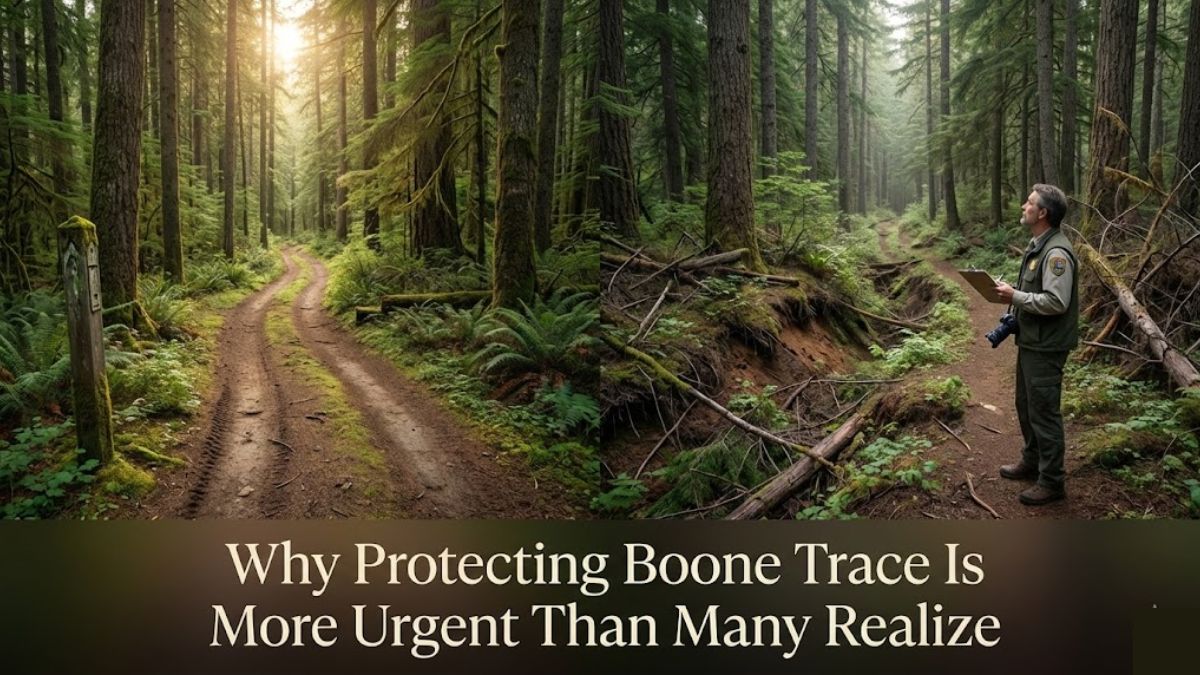
Boone Trace played a vital role in early American history, yet today it remains one of the most overlooked historic travel routes in the United States. Expanded by Daniel Boone in the late 1700s, the trail helped guide settlers through the Appalachian region toward the western frontier. Thousands relied on this route as they moved west in search of land and opportunity.
Despite its importance, Boone Trace is at serious risk of being lost forever. Preservation experts warn that remaining segments are disappearing faster than many people realize. Without greater awareness and coordinated efforts, Boone Trace may soon exist only in history books.
Boone Trace and Its Historical Importance


Boone Trace was not a single paved road but a network of paths that evolved over time. It followed natural terrain, including river valleys, ridges, and mountain gaps. The trail connected Native American trade routes with early European settlements and later became a gateway for westward migration.
Many modern roads and towns owe their locations to Boone Trace. Even where the original path is gone, its influence shaped settlement patterns across several states. Losing the physical remnants means losing a direct connection to how early America expanded.
Why Boone Trace Is Disappearing So Quickly
Unlike famous trails that received early protection, Boone Trace developed before historic preservation laws existed. Most of the trail crosses private land, leaving it vulnerable to change.

Urban growth, road construction, and agricultural expansion continue to erase visible traces. In some areas, shallow trail depressions have been filled or leveled, while forests reclaim paths that are no longer used. Each year, development pressures increase, accelerating the loss.
Lack of Public Awareness
One of the biggest threats to Boone Trace is how little the public knows about it. Many people travel over areas once part of the trail without realizing its historical significance.
Without awareness, communities rarely push for protection. Trails that are well-known receive signage, funding, and preservation plans. Boone Trace, by contrast, often goes unrecognized even in regions it helped shape.
Limited Legal Protection

Boone Trace lacks consistent legal protection across the states it crossed. While some sections fall within parks or protected lands, most do not.
Preservation efforts rely heavily on local initiatives and voluntary cooperation from landowners. Without broader recognition or designation, there is little to prevent future development from destroying remaining segments.
Why Time Matters More Than Ever
Preservation experts emphasize that Boone Trace is reaching a critical point. The remaining fragments are scattered and fragile. Once destroyed, they cannot be recovered or recreated.
Unlike buildings, historic trails depend on landscapes. When those landscapes change, the trail’s context is lost. Every delay increases the chance that another piece of Boone Trace will disappear.
The Educational Value of Boone Trace
Protecting Boone Trace is about more than saving land. It is about preserving an educational resource that helps explain early American movement, trade, and settlement.
Physical trail remnants allow students and visitors to experience history directly. Walking a preserved section offers insight that textbooks cannot replicate. Losing this resource limits how future generations understand the past.
Technology Offers a Narrow Window of Opportunity
Modern mapping and research tools have made it easier to identify Boone Trace’s route. Digital overlays, historical records, and geographic analysis can pinpoint likely segments.
However, documentation alone is not enough. Mapping must happen before development erases physical evidence. Preservationists warn that this window is closing quickly.
What Protection Really Means
Protecting Boone Trace does not mean freezing land in time. It can involve documentation, education, signage, and thoughtful land-use planning.
In some cases, protection may simply mean recognizing a site’s importance before development occurs. In others, it may involve incorporating trail history into parks, greenways, or heritage tourism projects.
Why Boone Trace Deserves Attention Now
As interest in public history and heritage tourism grows, Boone Trace represents an untapped opportunity. Preserving what remains can strengthen local identity and provide economic benefits through education and tourism.
Ignoring the trail, however, guarantees its disappearance. Preservation experts agree that action taken now—even small steps—can make a meaningful difference.
Conclusion
Boone Trace helped shape the movement of people and the growth of early America, yet it faces an uncertain future. The urgency to protect this historic trail is greater than many realize, driven by rapid development, low awareness, and limited legal safeguards.
Saving Boone Trace does not require rebuilding the past. It requires recognizing what remains and acting before it is gone. Protecting even small fragments ensures that this important chapter of American history remains visible, tangible, and meaningful for generations to come.