


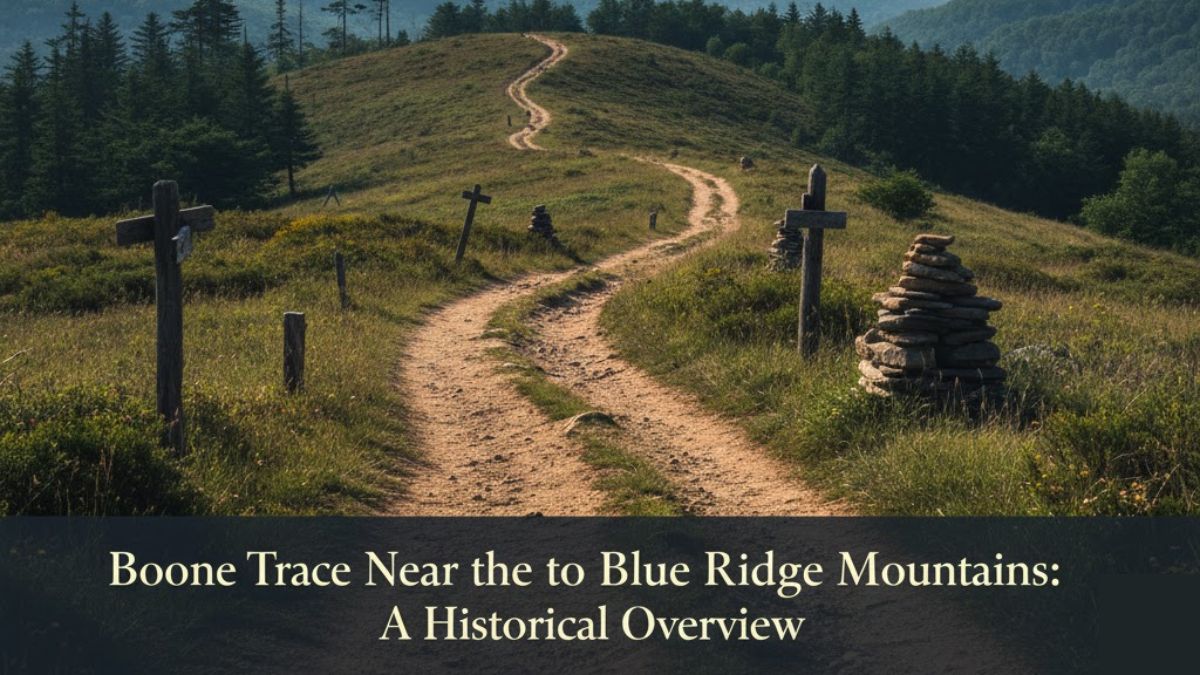
The Blue Ridge Mountains are known today for their scenic beauty, winding roads, and popular hiking trails. Millions of visitors travel through this region each year without realizing they are following paths shaped by centuries of history. Long before modern highways existed, early settlers relied on narrow wilderness routes to cross these mountains. One of the most important of these paths was Boone Trace.
Boone Trace played a key role in connecting eastern colonies to the western frontier. Near the Blue Ridge Mountains, the trail became a vital link for settlers, traders, and explorers moving toward new lands. Understanding this history helps us see the Blue Ridge region not just as a natural landmark, but as a gateway to America’s past.
The Origins of Boone Trace


Boone Trace was expanded by Daniel Boone in the late 1700s. The trail followed ancient Native American routes that had been used for hunting, trade, and seasonal migration. These paths were carefully chosen to navigate the difficult mountain terrain.
As settlers pushed westward, Boone and other frontiersmen widened and marked these trails. Though still rough, Boone Trace became one of the most reliable routes through the Appalachian Mountains, including areas near the Blue Ridge.
The Blue Ridge Mountains as a Natural Barrier
The Blue Ridge Mountains form part of the larger Appalachian range. In the colonial era, they presented a major obstacle to westward movement. Dense forests, steep slopes, and unpredictable weather made crossing dangerous.

Boone Trace helped settlers find practical passages through this rugged landscape. While it did not cut directly through the highest peaks, it connected to nearby routes that guided travelers toward mountain gaps and valleys. These connections made the Blue Ridge region a critical transition zone between the eastern colonies and the frontier.
Native American Use of the Region
Long before European settlers arrived, Native American tribes traveled through the Blue Ridge Mountains using established trail networks. These routes connected villages, hunting grounds, and trade areas.
Boone Trace incorporated portions of these Indigenous paths. As settlers began using the trail, Native American communities faced displacement and loss of access to their traditional lands. This history is an essential part of the story and must be acknowledged when discussing Boone Trace near the Blue Ridge Mountains.
Settlement and Migration Near the Trail

As Boone Trace gained popularity, settlers began establishing communities near its route. Forts, cabins, and farms appeared in valleys and along river crossings.
Near the Blue Ridge Mountains, these settlements provided rest points and supplies for travelers. Over time, they grew into permanent towns. Many communities in the region trace their origins to early settlement patterns influenced by Boone Trace and related routes.
Economic Activity Along Boone Trace
Boone Trace supported early economic development. Settlers transported tools, crops, and livestock along the trail. Traders carried animal pelts and other goods back to eastern markets.
The trail helped create early trade networks that connected the Blue Ridge region to larger economic systems. This exchange encouraged further settlement and strengthened the frontier economy.
Influence on Modern Roads
Many modern roads near the Blue Ridge Mountains follow paths similar to Boone Trace. Early trail builders selected routes that avoided steep terrain and used natural passages.
As transportation evolved, these paths became the foundation for wagon roads, turnpikes, and eventually paved highways. Boone Trace’s influence can still be seen in the layout of regional transportation networks today.
Decline of Boone Trace
By the early 1800s, Boone Trace began to lose importance. Improved roads and new transportation methods replaced the narrow trail. As railroads expanded, long-distance travel changed dramatically.
Without maintenance or formal protection, Boone Trace gradually faded from public memory. In the Blue Ridge region, nature reclaimed much of the land, hiding the trail beneath forests and farmland.
Preservation Challenges in the Blue Ridge Region
Preserving Boone Trace near the Blue Ridge Mountains is challenging. Much of the land is privately owned, and development pressures continue to grow.
Additionally, identifying the exact path of the trail is difficult due to limited historical records. Preservation efforts require careful research, cooperation, and community support to succeed.
Why Boone Trace Still Matters
Boone Trace remains important because it represents a turning point in American history. It shows how people overcame natural barriers and reshaped the land.
Near the Blue Ridge Mountains, the trail highlights the region’s role as a gateway between east and west. Preserving this history helps us understand how modern America developed.
Educational and Tourism Potential
Boone Trace has strong potential for education and heritage tourism. Interpretive signs, digital maps, and guided tours could help visitors understand the trail’s significance.
Connecting Boone Trace with existing Blue Ridge attractions could create a richer historical experience for travelers and support local economies.
Conclusion
Boone Trace near the Blue Ridge Mountains played a crucial role in early American migration and settlement. It connected eastern communities to the frontier and shaped the region’s development.
Though much of the trail has faded, its impact remains. By studying and preserving Boone Trace, we honor the history of the Blue Ridge region and ensure that this important chapter of American history is not forgotten.