
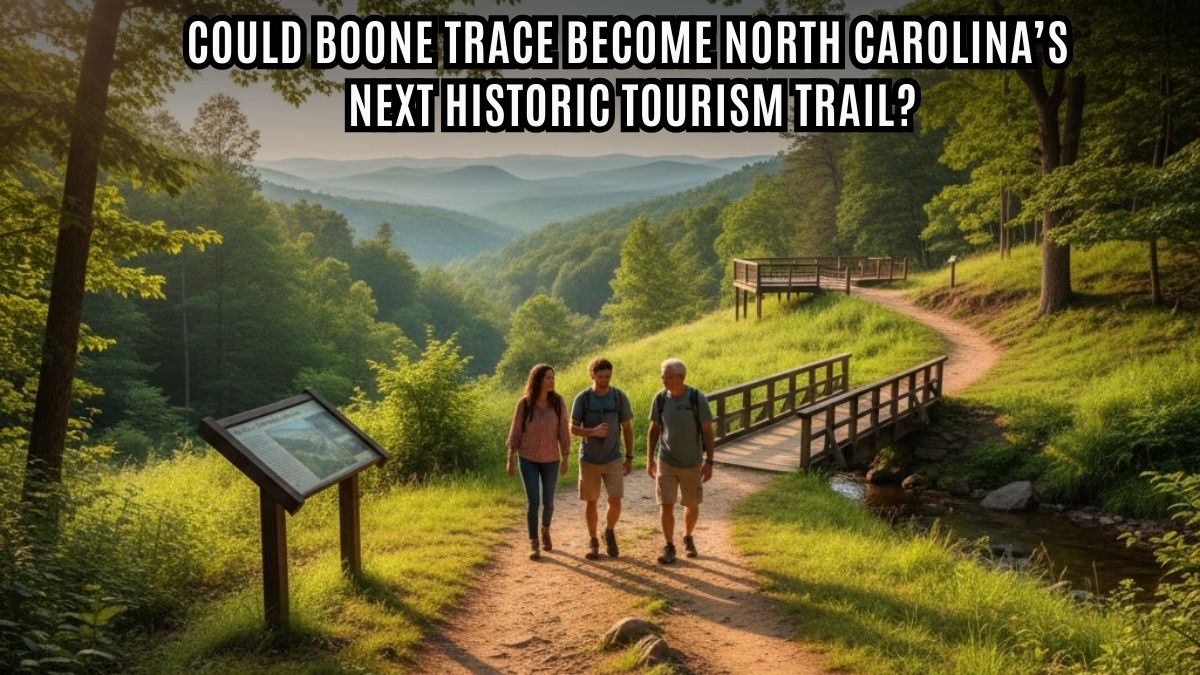
Historic tourism is growing across the United States. Travelers are increasingly interested in walking historic trails, visiting heritage sites, and experiencing places that shaped American history. In North Carolina, popular attractions like the Blue Ridge Parkway and the Appalachian Trail already draw millions of visitors each year. But one historic route remains largely overlooked: Boone Trace.
Once a critical pathway to the American frontier, Boone Trace played a major role in early settlement and westward expansion. Today, historians and preservationists are asking an important question: Could Boone Trace become North Carolina’s next historic tourism trail?
What Was Boone Trace?

Boone Trace was a frontier trail expanded by Daniel Boone in the late 1700s. It followed ancient Native American paths and led settlers from eastern colonies through the Cumberland Gap into Kentucky.
While the main trail is often associated with Virginia and Kentucky, Boone Trace was closely connected to North Carolina. Settlers from North Carolina traveled north into Virginia and then west along Boone Trace, making the state an important part of the trail’s story.
Why Historic Trails Attract Tourists
Historic trails offer more than scenery. They provide stories, education, and emotional connection. Travelers enjoy retracing the steps of early settlers, learning local history, and exploring preserved landscapes.

Successful examples include:
- The Appalachian Trail
- The Overmountain Victory Trail
- The Cherokee Trail of Tears
These trails attract hikers, history enthusiasts, students, and families. Boone Trace has similar potential if properly preserved and promoted.
North Carolina’s Strong Tourism Foundation
North Carolina already has a strong tourism infrastructure. The state is known for:
- Scenic mountain landscapes
- Historic towns and museums
- Outdoor recreation
- Heritage travel routes

This makes it an ideal place to develop another historic trail. Boone Trace could complement existing attractions and offer a new experience focused on early frontier history.
What Remains of Boone Trace Today
Parts of Boone Trace still exist, though many are unmarked. Some sections lie within forests, private land, or near modern roads. These remnants offer a starting point for preservation.
With historical research, mapping, and cooperation from landowners, these sections could be connected through signage, trails, and educational materials. Even partial preservation could create meaningful tourism experiences.
Economic Benefits of a Boone Trace Tourism Trail
Developing Boone Trace as a historic tourism trail could bring economic benefits to local communities. Heritage tourism often supports:
- Small businesses
- Hotels and restaurants
- Local guides and museums
- Rural economies
Visitors traveling along Boone Trace could explore small towns, historic sites, and natural areas. This would encourage longer stays and increased spending in less-developed regions.
Educational Value for Visitors
A Boone Trace tourism trail would offer strong educational value. Visitors could learn about:
- Early American settlers
- Native American history
- Frontier life and migration
- The challenges of westward travel
Interactive exhibits, guided tours, and digital maps could make history accessible and engaging for all ages. Schools and universities could also use the trail as a learning resource.
Challenges to Developing the Trail
Despite its potential, turning Boone Trace into a tourism trail comes with challenges:
- Limited physical remains of the original trail
- Private land ownership issues
- Funding for preservation and promotion
- Balancing development with conservation
These challenges are not unique. Other historic trails faced similar issues but succeeded through partnerships, public support, and phased development.
The Role of Preservation and Partnerships
Preserving Boone Trace would require cooperation between:
- State and local governments
- Historical societies
- Native American communities
- Landowners
- Tourism organizations
Respecting Indigenous history is especially important. Any tourism project should include Native American voices and perspectives to present a complete and respectful story.
Could Boone Trace Succeed as a Tourism Trail?
The answer may be yes—with the right approach. Boone Trace has:
- Strong historical significance
- Connections to North Carolina’s past
- Growing public interest in heritage tourism
- Potential economic benefits
By starting small—through markers, maps, and educational programs—the trail could gradually grow into a recognized historic route.
Why Now Is the Right Time
Interest in outdoor and heritage travel has increased in recent years. Travelers seek meaningful experiences, not just destinations. Boone Trace fits this trend perfectly.
Preserving and promoting the trail now could prevent remaining sections from being lost to development. Acting today ensures future generations can experience and learn from this important chapter of American history.
Conclusion
Boone Trace once helped shape the American frontier. Today, it has the potential to shape North Carolina’s historic tourism future. With thoughtful preservation, education, and community involvement, Boone Trace could become a meaningful tourism trail that honors history while supporting local economies.
The question is no longer whether Boone Trace matters—it clearly does. The real question is whether North Carolina is ready to bring this forgotten path back into the spotlight and allow visitors to walk a trail that helped build a nation.