
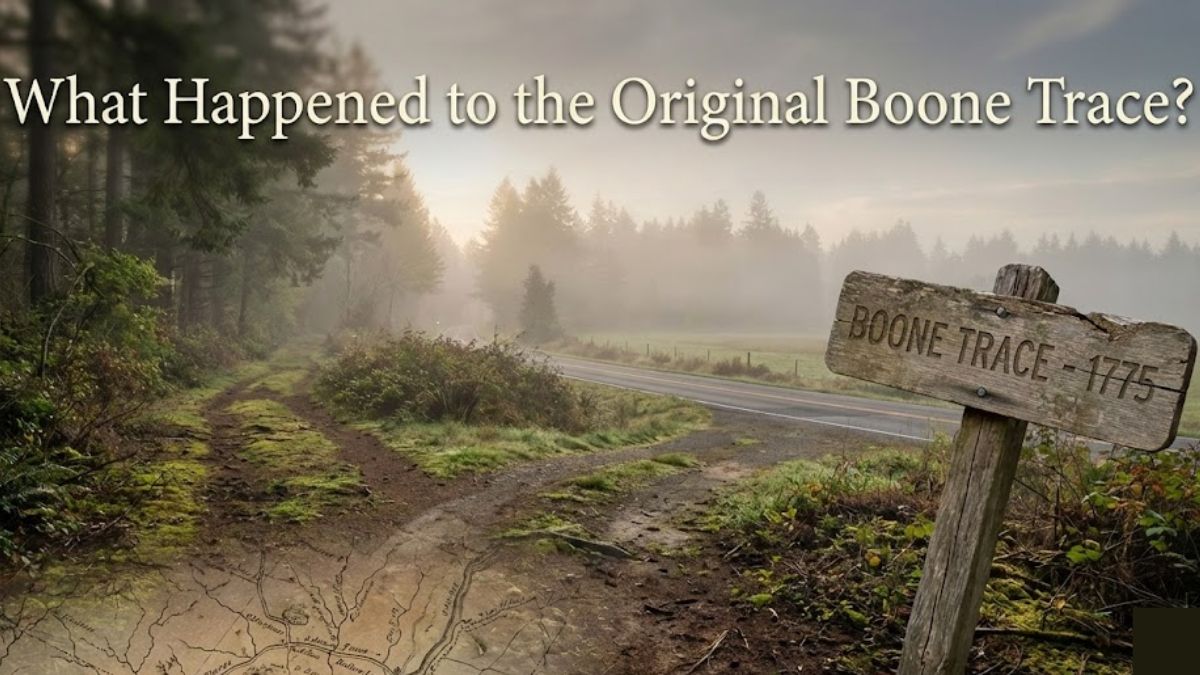
Boone Trace was once one of the most important travel routes in early American history. Expanded by Daniel Boone in the late 1700s, the trail guided settlers through the Appalachian region and into what would become Kentucky and the western frontier. Thousands of families followed this path as they moved west in search of land and opportunity.
Today, many people ask a simple question: what happened to the original Boone Trace? The answer is complex. Time, development, and changing transportation needs slowly erased much of the trail, leaving only fragments behind. Understanding how this happened helps explain why Boone Trace is now difficult to see on the modern landscape.
How Boone Trace Began

Boone Trace did not begin as a European trail. Long before settlers arrived, Native American tribes used a network of paths through the mountains for trade, hunting, and travel. Daniel Boone and other frontiersmen expanded these existing routes, clearing vegetation and improving passage for settlers.
The trail followed natural features such as ridges, river crossings, and mountain gaps. It was never a formal road but a rugged path shaped by foot traffic, horses, and wagons. This informal nature made Boone Trace effective—but also vulnerable.
Why the Trail Was Never Preserved Early
During the late 1700s and early 1800s, Boone Trace was viewed as a practical route, not a historic landmark. Preservation was not a priority in an era focused on survival and expansion.

As settlements grew, people improved the trail to suit their needs. Portions were widened, rerouted, or abandoned altogether. No laws or organizations existed to protect early travel routes, and few imagined the trail would one day be historically important.
The Rise of Roads and Towns
As populations increased, Boone Trace was gradually replaced by more permanent roads. Wagon roads followed similar paths but were engineered for heavier traffic. Later, railroads and highways transformed the same corridors.
In many areas, modern roads now cover the original trail. Towns developed along these routes, permanently changing the landscape. What once was a narrow dirt path became pavement, buildings, and infrastructure.
How Nature Reclaimed the Trail

In areas where Boone Trace was no longer used, nature slowly reclaimed it. Forests grew over abandoned paths, erosion reshaped the ground, and weather erased visible signs of travel.
Over decades, trail depressions filled in, and landmarks described in early journals disappeared. Without constant use or maintenance, the trail faded back into the natural environment.
Agriculture and Land Use Changes
Farming played a major role in the disappearance of Boone Trace. As land was cleared and plowed, shallow trail features were flattened. Fields expanded, and fence lines cut across former paths.
Because much of Boone Trace crossed private land, landowners adapted the terrain for agriculture and development without any requirement to preserve historical features.
Where Boone Trace Still Exists Today
Although most of the original Boone Trace is gone, small segments remain. These are often found in protected areas such as state parks, forests, and undeveloped land.
Some remnants appear as narrow footpaths, sunken roadbeds, or ridge-top routes that match historical descriptions. In other places, historical markers indicate where the trail once ran, even if no physical trace remains.
How Historians Track the Original Route
Historians rely on a combination of sources to identify Boone Trace. These include early maps, settlers’ diaries, land records, and geographic features.
By comparing written descriptions with the landscape, researchers can often pinpoint likely sections of the trail. Modern technology, such as digital mapping and aerial surveys, has improved accuracy but cannot replace lost physical evidence.
Why Boone Trace Is Often Confused with Other Trails
Boone Trace is sometimes confused with the Wilderness Road, which was a later, more developed route. While related, the two are not the same.
As the Wilderness Road expanded, it absorbed and replaced portions of Boone Trace. Over time, the older trail’s identity faded, contributing to confusion about its original route and purpose.
Why Preservation Efforts Came Too Late
By the time historical preservation gained momentum in the 20th century, much of Boone Trace had already disappeared. Unlike famous trails that received early attention, Boone Trace was overshadowed by more visible routes.
Efforts today focus on documenting what remains and educating the public, rather than restoring the trail in its entirety.
Why Boone Trace Still Matters
Even in fragments, Boone Trace offers valuable insight into early American movement and settlement. It represents the challenges faced by settlers and the deep connection between geography and history.
Preserving its memory helps tell a more complete story of westward expansion and the people who shaped it.
Conclusion
The original Boone Trace did not vanish overnight. It slowly disappeared through development, natural change, and lack of early preservation. What remains today are scattered fragments and historical records that hint at its former importance.
Understanding what happened to Boone Trace highlights the need to protect the few remaining traces. Once lost, such historic landscapes cannot be recovered. By recognizing their value now, we ensure that Boone Trace remains part of America’s living history rather than a forgotten footnote.