
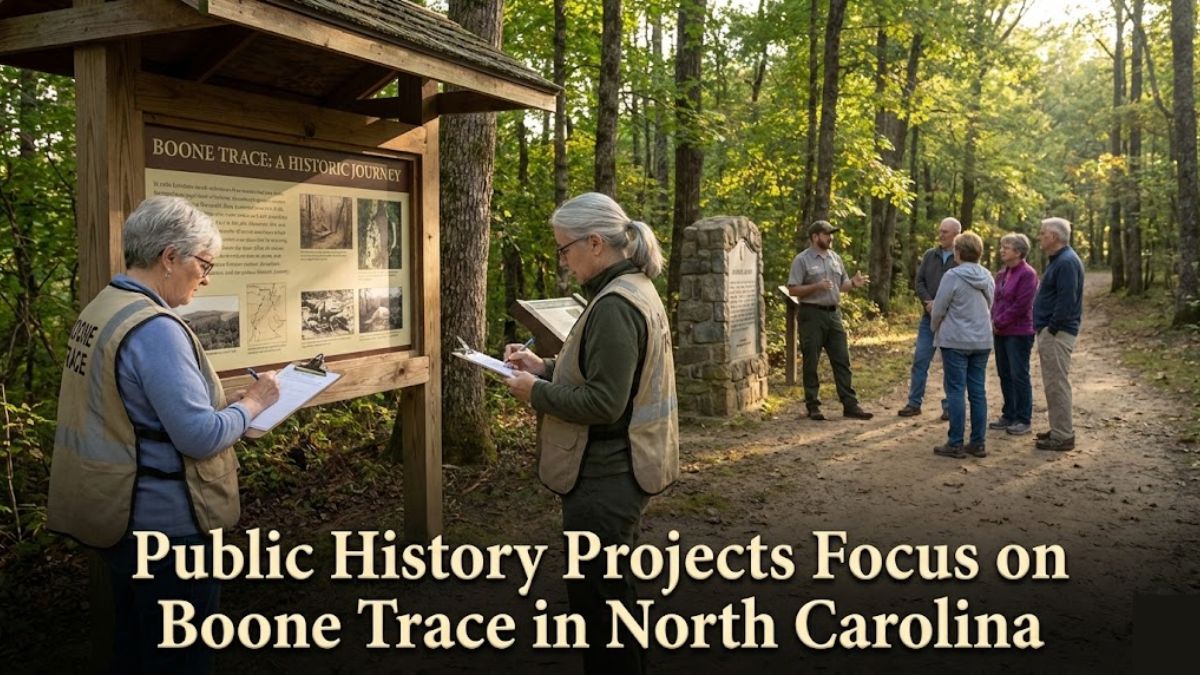
Across North Carolina, historians, educators, and local communities are working to preserve the stories that shaped the state. One focus of these efforts is Boone Trace, a historic frontier route that helped connect early settlers to the western frontier. Though much of the physical trail has disappeared, public history projects are bringing its story back into view.
These projects aim to make history accessible to everyone—not just scholars. Through research, education, and community engagement, Boone Trace is being recognized as an important part of North Carolina’s historical landscape.
What Is Boone Trace?

Boone Trace was a frontier trail expanded by Daniel Boone in the late 18th century. It followed long-established Native American paths and guided settlers through the Appalachian region toward Kentucky.
Although the most famous sections ran through Virginia and Kentucky, Boone Trace was closely connected to North Carolina. Settlers from western North Carolina traveled feeder routes that linked their communities to the main trail, making the state an essential part of Boone Trace’s history.
The Role of Public History
Public history focuses on sharing history outside traditional classrooms. Museums, historic sites, documentaries, digital archives, and community programs all fall under public history.
Public history projects related to Boone Trace aim to:
- Educate the public about frontier travel
- Preserve historical records
- Include diverse perspectives
- Encourage community participation
By doing so, they ensure Boone Trace’s story reaches a wide audience.
Research and Documentation Efforts
One major focus of public history projects is research. Historians study journals, maps, land records, and archaeological evidence to trace Boone Trace’s route through North Carolina.
Because the trail lacks clear physical remains, documentation is critical. Universities, historical societies, and independent researchers collaborate to build a clearer picture of where the trail ran and how it was used.
These efforts help protect Boone Trace by establishing its historical significance within the public record.
Digital History and Mapping Projects
Technology has become a powerful tool for public history. Digital mapping projects allow historians to reconstruct Boone Trace using historical data.
Interactive maps, online exhibits, and virtual tours help people visualize the trail’s path and understand its impact. These tools make Boone Trace accessible to students, educators, and the general public, even when physical access is limited.
Educational Programs and Schools
Schools play an important role in public history. Educators incorporate Boone Trace into lessons about North Carolina history, westward expansion, and frontier life.
Public history projects often provide:
- Lesson plans
- Primary source materials
- Field trip opportunities
- Guest lectures
These programs help students connect local history to broader national stories.
Community-Based History Projects
Local communities are essential to preserving Boone Trace. Public history projects encourage residents to share family stories, documents, and oral histories connected to early settlement.
Community events, walking tours, and local exhibits help residents engage with the trail’s history. These efforts build pride and awareness while keeping Boone Trace relevant to modern audiences.
Recognizing Native American History
An important part of Boone Trace public history projects is recognizing Native American perspectives. The trail followed routes used by Indigenous tribes long before European settlers arrived.
Public historians work with Native communities to present a more complete and respectful history. This includes acknowledging displacement and conflict caused by westward expansion and ensuring Indigenous voices are included in interpretation.
Challenges Facing Public History Projects
Despite growing interest, public history projects face challenges:
- Limited funding
- Fragmented historical records
- Private land access restrictions
- Balancing multiple historical narratives
Overcoming these obstacles requires collaboration, creativity, and long-term commitment.
Public History and Preservation Efforts
Public history projects often support preservation efforts. By raising awareness, they help build public support for historic markers, protected sites, and conservation initiatives.
Even when physical preservation is not possible, documentation and education ensure Boone Trace is not forgotten.
Why These Projects Matter
Public history projects keep Boone Trace alive in public memory. They help people understand how early travel routes shaped North Carolina’s development and connected communities.
By making history accessible and inclusive, these projects strengthen cultural identity and promote informed preservation.
Future Directions for Boone Trace Projects
As interest grows, future projects may include:
- Expanded digital archives
- Regional trail networks
- Collaborative museum exhibits
- Heritage tourism initiatives
These efforts could further integrate Boone Trace into North Carolina’s historical landscape.
Conclusion
Public history projects are playing a vital role in preserving Boone Trace in North Carolina. Through research, education, digital tools, and community engagement, they ensure this historic route remains part of the state’s shared story.
While Boone Trace may no longer be a visible trail, its legacy lives on through public history. These projects remind us that history is not just about the past—it is about understanding how that past continues to shape our present.