
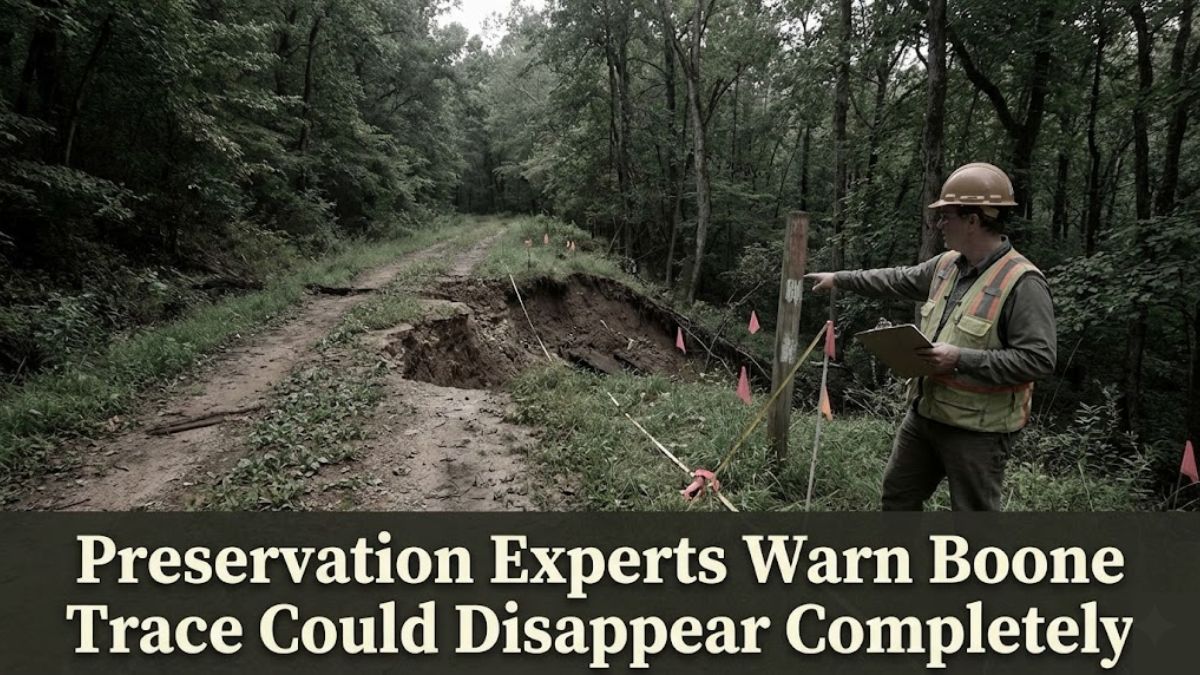
Boone Trace is one of the most important early travel routes in American history, yet few people know how close it is to being lost forever. Expanded by Daniel Boone in the late 18th century, the trail guided settlers through the Appalachian region toward the western frontier. It played a critical role in migration, trade, and settlement.
Today, preservation experts warn that Boone Trace could disappear completely if action is not taken. Urban development, land use changes, and lack of public awareness continue to erase the remaining evidence of this historic trail.
Why Boone Trace Matters

Boone Trace was not just a path through the wilderness. It was:
- A gateway to westward expansion
- A link between Native American trade routes and European settlements
- A foundation for future roads and towns
Without Boone Trace, the settlement of Kentucky and surrounding regions would have looked very different.
How Boone Trace Is Being Lost
Experts point to several major threats that are accelerating the trail’s disappearance.
1. Urban and Suburban Development

New housing, roads, and commercial projects often overlap with the original route. Once land is developed, any remaining trail features are permanently destroyed.
2. Agricultural Expansion
Farming has altered the landscape for centuries. Plowing and land leveling remove shallow trail depressions and erase visible signs of historic paths.
3. Road Construction
Many modern highways and rural roads follow the same natural routes as Boone Trace. While this shows the trail’s influence, it also means the original surface is long gone.
Limited Legal Protection
One of the biggest concerns among preservationists is the lack of legal protection for Boone Trace. Unlike famous routes such as the Oregon Trail, Boone Trace does not have widespread federal designation.
This means:
- Protection varies by state
- Private landowners control much of the route
- Preservation efforts rely on local support
Without formal recognition, saving Boone Trace becomes much more difficult.
Experts Speak Out
Historians and preservation specialists stress that Boone Trace is at a tipping point. According to experts:
- Only small, fragmented sections remain
- Many are undocumented
- Future development could erase them within decades
They argue that without immediate documentation and education, Boone Trace may exist only in written records.
Why Public Awareness Is Low
Despite its importance, Boone Trace is less well-known than other historic trails. Experts say this is due to:
- Limited signage
- Few public access points
- Lack of inclusion in school curricula
When people do not know a resource exists, they are less likely to protect it.
The Role of Technology in Preservation
Modern technology offers new hope for Boone Trace. Preservationists are using:
- Digital mapping
- GIS data
- Historical overlays
- Drone surveys
These tools help identify and document remaining segments before they disappear.
What Can Be Done to Save Boone Trace
Experts recommend several immediate steps:
1. Documentation
Mapping and recording all known segments should be a top priority.
2. Education
Public programs, museums, and online resources can raise awareness.
3. Partnerships
Collaboration between landowners, historians, and local governments is essential.
4. Heritage Tourism
Responsible tourism can encourage communities to value and protect the trail.
Lessons from Other Historic Trails
Preservation experts often point to successful efforts involving:
- The Appalachian Trail
- The Oregon Trail
- The Natchez Trace
These routes benefited from early recognition and federal involvement. Boone Trace, they argue, deserves similar attention.
What Happens If Boone Trace Is Lost
If Boone Trace disappears completely:
- Physical connections to frontier history will be gone
- Educational opportunities will be reduced
- Communities lose a unique cultural resource
Once lost, such historic landscapes cannot be recreated.
Why Action Matters Now
Experts emphasize that time is the greatest threat. Development pressures continue to grow, and every year that passes increases the risk of permanent loss.
Preservation today does not require rebuilding the trail—but acknowledging, documenting, and protecting what remains.
Conclusion
Boone Trace helped shape the movement of people and the growth of early America. Yet despite its importance, it faces the real possibility of disappearing completely. Preservation experts warn that without immediate action, future generations may never experience the physical landscape that once guided thousands westward.
Saving Boone Trace requires awareness, cooperation, and commitment. Protecting even small remnants ensures that this vital chapter of American history remains visible, meaningful, and accessible for years to come.