
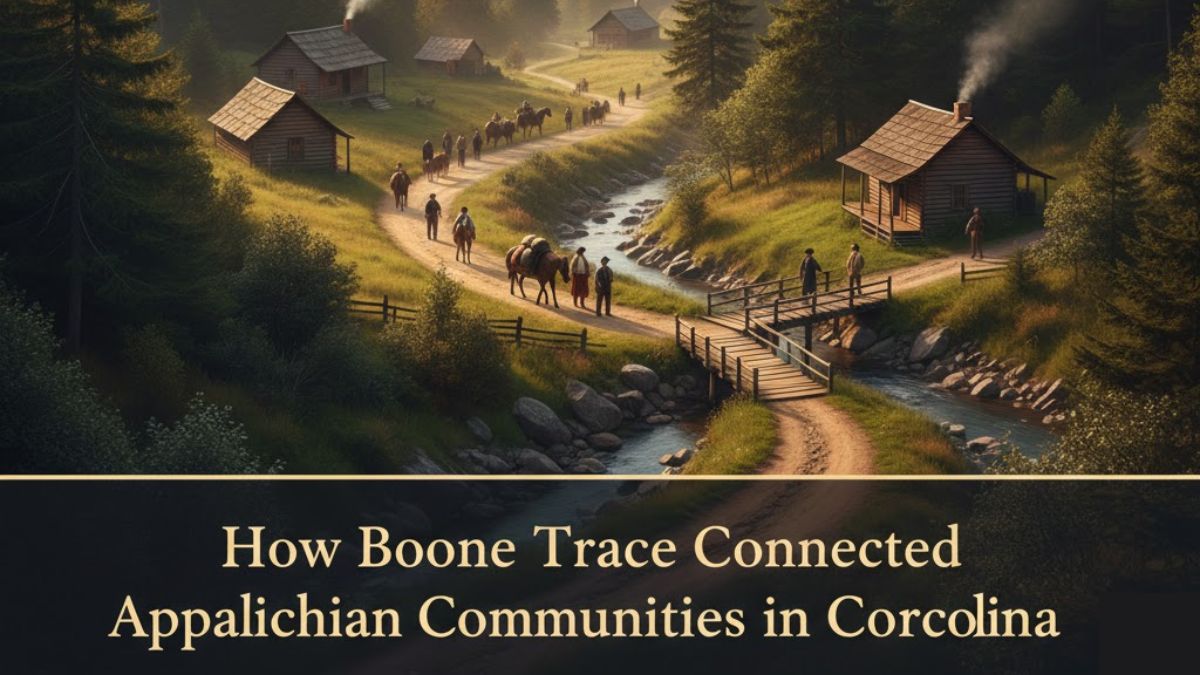
Today, Appalachian communities in North Carolina are known for their strong traditions, mountain culture, and deep sense of place. However, centuries ago, these communities were isolated by rugged terrain and dense forests. Travel was difficult, and communication between settlements was limited. One historic route helped change that reality—Boone Trace.
Boone Trace was more than a path to the western frontier. In North Carolina’s Appalachian region, it served as a vital connector between communities. It linked families, supported trade, and helped shape a shared Appalachian identity. Understanding Boone Trace reveals how early mountain communities survived and grew.
What Was Boone Trace?

Boone Trace was a frontier trail expanded by Daniel Boone in the late 1700s. It followed long-established Native American paths that crossed the Appalachian Mountains and led toward the Cumberland Gap and Kentucky.
Although the most famous sections ran through Virginia and Kentucky, Boone Trace was closely tied to North Carolina. Appalachian settlers in western North Carolina used feeder trails and local paths to reach Boone Trace, making it part of a larger regional network.
Isolation in the Appalachian Mountains
The Appalachian Mountains created natural isolation for early settlers. Steep ridges, narrow valleys, and thick forests made travel slow and dangerous. Communities were often separated by just a few miles but had little contact with one another.

Boone Trace and its connecting paths offered a solution. It provided a known route that people could trust. This allowed families to travel more safely between settlements and reduced isolation across the region.
Connecting Mountain Settlements
Boone Trace helped link small Appalachian communities across western North Carolina. Settlers used the trail to visit family members, exchange news, and maintain social ties.
Church gatherings, trading days, and seasonal events depended on these connections. Without Boone Trace and related routes, many mountain communities would have remained isolated for generations.
Supporting Trade and Local Economies

Trade was essential for Appalachian survival. Families produced crops, tools, animal pelts, and handmade goods. Boone Trace allowed these items to move between communities and beyond the mountains.
North Carolina Appalachian settlers used the trail to trade with neighboring regions. Goods traveled east and west, helping local economies grow. Boone Trace became a lifeline for commerce in a challenging environment.
Cultural Exchange Along the Trail
As people traveled Boone Trace, they carried more than goods—they carried ideas, traditions, and beliefs. Music, storytelling, farming techniques, and craftsmanship spread along the route.
This exchange helped shape a shared Appalachian culture. Many traditions still found in North Carolina’s mountain communities can be traced back to early interactions along Boone Trace and its feeder paths.
Native American Influence and Displacement
Before European settlers arrived, Native American tribes used these trails to connect their own communities. Boone Trace followed paths that were already important for trade and seasonal travel.
As settlers expanded into the region, Native American communities were displaced. This led to loss of land and culture. Any discussion of Boone Trace must recognize both its role in connecting settlers and its impact on Indigenous populations.
Role in Westward Migration
While Boone Trace connected local communities, it also served as a gateway to the frontier. Appalachian settlers from North Carolina often used the trail to migrate west into Kentucky.
This movement reduced overcrowding in mountain regions and opened new opportunities. Families who remained behind benefited from improved connections and trade networks supported by the trail.
Influence on Roads and Transportation
Many modern roads in Appalachian North Carolina follow routes similar to Boone Trace. Early travelers chose paths that avoided steep slopes and followed natural contours.
Over time, these paths became wagon roads and eventually paved highways. Boone Trace helped shape the region’s transportation system, influencing travel patterns that continue today.
Why Boone Trace Faded from Memory
As transportation improved, Boone Trace lost its importance. Railroads and modern roads replaced narrow trails. Nature reclaimed much of the land, and the trail disappeared from view.
Without formal preservation, Boone Trace faded from public awareness. Many residents are unaware that their communities were once connected by this historic route.
Preservation Challenges Today
Preserving Boone Trace in North Carolina’s Appalachian region is difficult. The trail crosses private land, forests, and developed areas. Identifying exact routes requires detailed historical research.
Despite these challenges, local historians and preservation groups continue to document the trail’s legacy. Increased awareness could help protect remaining sections.
Why Boone Trace Still Matters
Boone Trace matters because it tells the story of connection. It shows how Appalachian communities overcame isolation and built relationships across difficult terrain.
Preserving its history helps honor the resilience of North Carolina’s mountain settlers and the Indigenous people who traveled these paths long before them.
Conclusion
Boone Trace played a crucial role in connecting Appalachian communities in North Carolina. It supported trade, cultural exchange, and social ties while linking the region to the wider frontier.
Though much of the trail has vanished, its impact remains woven into Appalachian history. Remembering Boone Trace allows us to better understand how these communities formed, survived, and shaped the region we know today.