
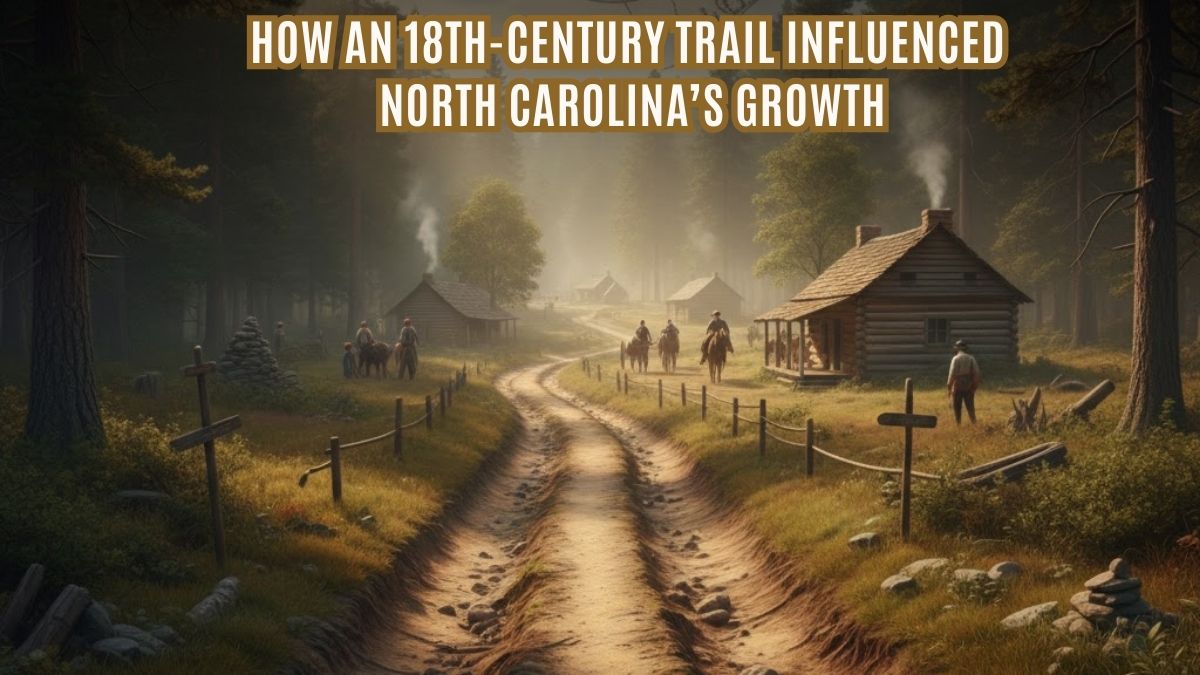
Long before modern highways and railroads, North Carolina’s growth depended on a network of frontier trails. One of the most significant was Boone Trace, an 18th-century route carved out by settlers and expanded by Daniel Boone. While largely forgotten today, this trail played a crucial role in connecting communities, supporting trade, and enabling westward expansion.
Boone Trace did more than provide a route to Kentucky and the American frontier—it helped shape North Carolina’s economic, social, and cultural development. Understanding its influence sheds light on the state’s transformation from a sparsely populated colony into a thriving hub of frontier settlement.
The Origins of the Trail

Boone Trace originated from ancient Native American paths. Indigenous tribes had long used the region’s natural passes, streams, and valleys for hunting, trade, and seasonal travel. When European settlers arrived, they followed these routes, widening and marking them to accommodate horses, wagons, and livestock.
Daniel Boone, a legendary frontiersman, played a pivotal role in formalizing the trail in the late 1700s. The route eventually stretched from the eastern colonies, through Virginia, and into Kentucky, linking North Carolina settlers to new opportunities in the western territories.
Connecting Communities in North Carolina
Before Boone Trace, travel within North Carolina’s interior was difficult. Mountainous terrain and dense forests made even short distances arduous. Isolated settlements had little contact with one another, limiting trade, communication, and social interaction.

Boone Trace changed that. By connecting eastern and western settlements, the trail became a lifeline. Families could travel safely to neighboring communities, attend churches, participate in local markets, and exchange news. Over time, this network of connected communities fostered a sense of regional identity and cooperation, strengthening North Carolina’s social fabric.
Supporting Trade and Economic Growth
Trade was a critical driver of growth in 18th-century North Carolina. Farmers and artisans relied on trails like Boone Trace to transport crops, livestock, and handmade goods.
The trail allowed settlers to move surplus products westward while bringing tools, seeds, and other necessities back east. Local economies thrived as communities along the trail became hubs of exchange. Inns, taverns, and small markets developed to support travelers, further stimulating economic activity.

Boone Trace helped establish a pattern of commerce that influenced settlement patterns for generations. Towns that emerged near the trail often became enduring centers of trade and governance.
Enabling Westward Expansion
While Boone Trace connected North Carolina communities internally, it also served as a gateway to the frontier. Many settlers used the trail to migrate west into Virginia and Kentucky.
This migration had several effects:
- Population Distribution: Moving west alleviated overcrowding in eastern settlements.
- Land Development: New farmland and communities emerged along the frontier.
- Cultural Exchange: Migrants carried traditions, knowledge, and practices from North Carolina, spreading them across the frontier.
By facilitating westward migration, Boone Trace helped North Carolina play a central role in the expansion of early America.
Cultural and Social Impact
Boone Trace was more than a trade and migration route—it was a conduit for culture. Travelers carried stories, songs, religious practices, and farming techniques along the trail.
Settlements along Boone Trace exchanged ideas and traditions, creating a shared Appalachian culture that still influences the region today. Churches, schools, and social gatherings often centered around trail-accessible towns, reinforcing the importance of connectivity in shaping early North Carolina society.
Challenges and Obstacles
Travel along Boone Trace was not easy. The mountainous terrain and unpredictable weather made journeys dangerous. Travelers faced steep passes, rivers, wild animals, and the risk of conflict with Indigenous tribes whose lands were being encroached upon.
Despite these challenges, Boone Trace remained a reliable route for decades, proving its strategic importance to settlers and contributing to the stability of the communities it connected.
Influence on Modern Infrastructure
Many of today’s highways and local roads in western North Carolina trace their origins to Boone Trace. The trail’s original routes were chosen for practicality—following valleys, avoiding steep ridges, and using natural passages.
Over time, these paths became wagon roads and eventually modern roads, illustrating how 18th-century decisions continue to shape transportation networks. Boone Trace’s influence can still be seen in towns and communities aligned along its historical route.
Preservation and Legacy
Unfortunately, much of Boone Trace has been lost to development, forest growth, and private land use. Without formal preservation, segments of the trail are at risk of disappearing entirely.
Despite this, the trail’s historical significance endures. Boone Trace is a symbol of early American resilience, innovation, and community-building. Efforts by historians, preservation groups, and local communities aim to document and protect what remains, ensuring future generations understand its role in North Carolina’s growth.
Conclusion
Boone Trace demonstrates how an 18th-century trail could profoundly shape a region. By connecting isolated settlements, facilitating trade, enabling westward migration, and spreading culture, the trail contributed significantly to North Carolina’s growth.
Though largely forgotten today, Boone Trace remains a testament to the determination of early settlers and the importance of connectivity in shaping societies. Preserving and understanding this historic route allows us to appreciate how trails like Boone Trace laid the foundation for modern North Carolina and America’s expansion into the frontier.