
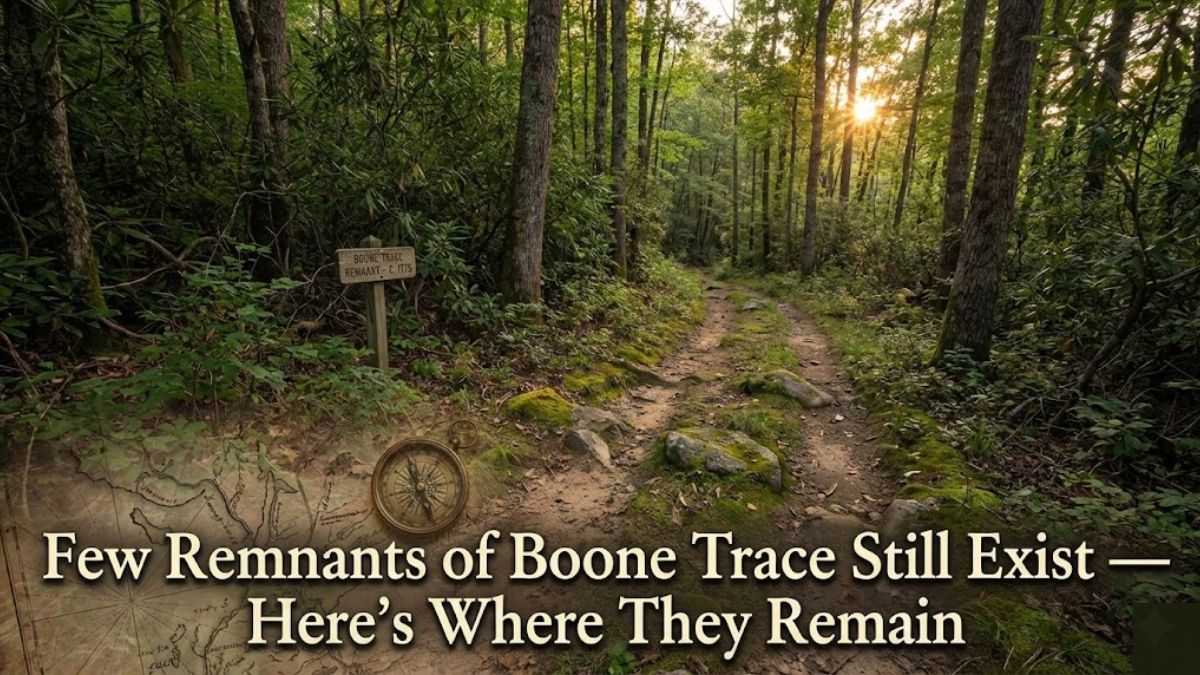
Boone Trace was once one of the most important travel routes in early American history. Expanded by Daniel Boone in the late 1700s, the trail helped guide settlers through the Appalachian region toward Kentucky and the western frontier. Thousands followed its path, shaping migration, settlement, and trade.
Today, however, few physical remnants of Boone Trace still exist. Roads, towns, and development have covered much of the original trail. Yet traces of Boone Trace remain hidden across the landscape for those who know where to look. These surviving pieces offer a rare connection to America’s frontier past.
Why Boone Trace Nearly Disappeared

Boone Trace was never a paved road. It began as a Native American path and evolved into a rough frontier trail. Over time, wagon roads, railroads, and highways replaced it.
As communities expanded, the original trail was absorbed into:
- Modern roads
- Private farmland
- Urban development
- Forested land reclaimed by nature
Without early preservation efforts, much of Boone Trace faded from view.
Preserved Segments in Kentucky

Some of the most recognizable remnants of Boone Trace remain in Kentucky, particularly near historic sites tied to Daniel Boone.
Notable locations include:
- Areas near Fort Boonesborough State Park
- Sections near the Kentucky River Palisades
- Forested paths following original ridge lines
In these places, visitors can still walk sections of land that closely resemble the original trail’s route.
Historical Markers and Monuments

Where physical paths no longer exist, historical markers help preserve Boone Trace’s memory. State and local historical societies have installed markers along the trail’s known route.
These markers often explain:
- The trail’s historical significance
- Its role in westward migration
- Connections to Native American paths
While not original trail surfaces, these markers help define where Boone Trace once passed.
Remnants in Virginia and Tennessee
In parts of Virginia and Tennessee, Boone Trace followed valleys and mountain passes that are still visible today. Some modern roads follow the same natural corridors used by the original trail.
In rural areas, old roadbeds and narrow paths through forests are believed to align with Boone Trace. These areas are often unmarked but recognized by historians through maps and land records.
Connections in North Carolina
Although Boone Trace is most closely associated with Kentucky, North Carolina played an important supporting role. Feeder routes from western North Carolina connected settlers to Boone Trace farther west.
In the Blue Ridge region, historians have identified:
- Early travel corridors
- Creek crossings
- Ridge-top paths
While few physical remains are confirmed, the influence of Boone Trace can still be traced through regional settlement patterns.
How Historians Identify Boone Trace Today
Because the trail lacks continuous physical remains, historians rely on multiple sources:
- Journals and diaries
- Early maps
- Land deeds
- Archaeological evidence
By comparing these sources, researchers can identify likely segments of Boone Trace even when no visible trail remains.
Role of Parks and Protected Lands
Public lands play a major role in preserving Boone Trace remnants. State parks, national forests, and conservation areas often protect landscapes that were never fully developed.
In these areas, terrain features such as:
- Narrow ridges
- Shallow river crossings
- Natural gaps in mountains
Match descriptions of the original trail, making them valuable for historical study.
Why So Little Remains Today
The disappearance of Boone Trace highlights how fragile early travel routes were. Unlike stone roads or rail lines, dirt trails leave little lasting evidence once they fall out of use.
Additionally:
- The trail crossed private land
- No early preservation laws existed
- Economic development took priority
As a result, only fragments survived.
Modern Efforts to Preserve the Trail’s Memory
Today, preservation focuses more on education than restoration. Efforts include:
- Digital mapping projects
- Educational programs
- Museum exhibits
- Heritage tourism initiatives
These projects help keep Boone Trace relevant even when physical remains are limited.
Why These Remnants Matter
Even small remnants of Boone Trace are historically valuable. They represent:
- Early American migration
- Native American travel networks
- Frontier survival and expansion
Walking a preserved section offers a powerful reminder of the challenges early settlers faced.
Visiting Boone Trace Remnants Today
Visitors interested in Boone Trace should:
- Visit state parks tied to Daniel Boone
- Look for official historical markers
- Explore museums focused on frontier history
- Respect private property boundaries
Researching ahead of time helps ensure a meaningful and respectful visit.
Conclusion
Although Boone Trace once guided thousands westward, only a few remnants still exist today. These surviving paths, markers, and landscapes provide rare windows into America’s frontier era.
While much of the trail has vanished, its legacy remains etched into the land and the history of the regions it shaped. By recognizing and protecting what remains, we preserve not just a trail, but the story of movement, survival, and expansion that helped form the nation.